
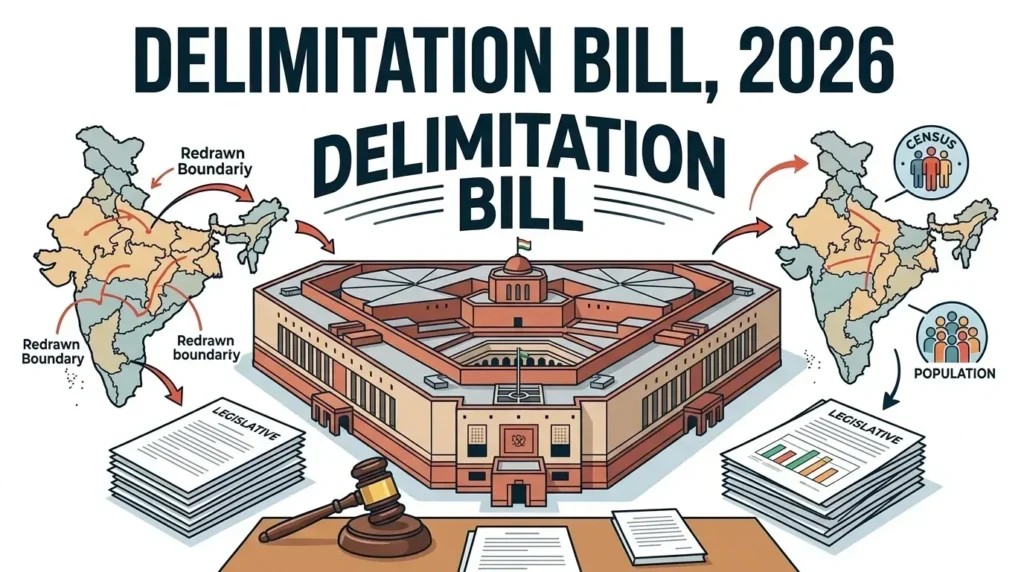
The debate on delimitation has intensified. At first, it appears technical. However, in reality, it deals with representation, seat distribution, and institutional balance. Therefore, it is not just about boundaries; rather, it determines how political power is structured in India.
Meaning and Constitutional Basis
Delimitation refers to the redrawing of constituency boundaries and reallocation of seats. In simple terms, it ensures that each representative speaks for a roughly equal population.
The Constitution provides a clear framework. Article 82 mandates Parliament to enact a Delimitation Act after every Census, while Article 170 applies the same principle to State Assemblies. Thus, the process operationalises the idea of equal representation.
However, seat allocation has remained frozen since 1976, based on the 1971 Census. This freeze, extended through later amendments, will end after 2026. Consequently, a fresh exercise is expected.
Delimitation After 2026: Scale and Process
The upcoming exercise is expected to be extensive. Proposals suggest an increase in Lok Sabha seats, along with inter-State redistribution. This would be the first such redistribution since 1976.
At the same time, delimitation depends on Census data. Delays in conducting the Census have created uncertainty regarding timelines and data usage.
Past experience highlights the complexity. The last nationwide exercise began in 2002 and concluded in 2008, with implementation in 2009. More recently, delimitation in Assam and Jammu & Kashmir was conducted separately.
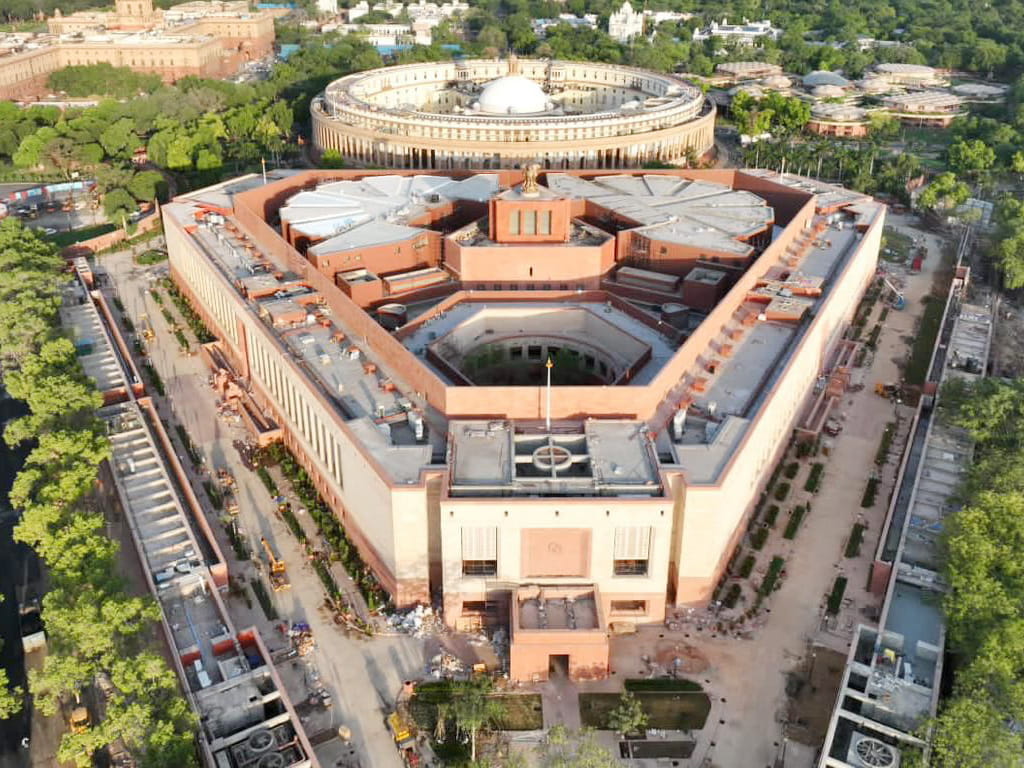
Regional Representation and Seat Redistribution
Delimitation based on population is likely to alter the distribution of seats among States.
States such as Uttar Pradesh, Bihar, and Rajasthan may see an increase in seats due to higher population growth.
In contrast, States like Tamil Nadu and Kerala may see a decline in their relative share.
Consequently, population-heavy States may gain greater influence in Parliament.
This shift matters. These States will have a stronger voice in shaping national policies. At the same time, southern States fear losing political weight despite better governance indicators.
Women’s Representation and Delimitation
The Nari Shakti Vandan Adhiniyam (106th Constitutional Amendment) provides for 33% reservation for women in the Lok Sabha and State Assemblies.
However, its implementation is conditional. It will come into effect only after the completion of a Census and a subsequent delimitation exercise. Therefore, this process becomes a necessary step for operationalising women’s reservation.
Current data indicates limited representation. After the 2024 Lok Sabha elections, the number of women members declined from 78 to 74. In State Assemblies, women constitute less than 10% of total members.
Census and Reservation Concerns
The process relies heavily on Census data. However, the absence of caste enumeration in recent data raises questions regarding allocation of reserved seats.
Reservation for Scheduled Castes and Scheduled Tribes depends on population figures.
At the same time, demands for extending reservation to Other Backward Classes continue in policy discussions.
In this context, the nature and scope of Census data become significant for equitable seat allocation.
Institutional Balance and Parliamentary Impact
An increase in Lok Sabha seats may have implications for institutional balance.
If the strength of the Lok Sabha rises significantly while the Rajya Sabha remains unchanged, the numerical gap between the two Houses will widen. This may affect outcomes in joint sittings, where decisions are based on a simple majority.
Similarly, Members of Parliament form part of the electoral college for the President and Vice-President. Changes in composition may influence representation in these elections. Thus, institutional balance may tilt in favour of the Lower House.
The size of the Council of Ministers is capped at 15% of the Lok Sabha strength. An increase in seats may raise this number from around 81 to over 120.
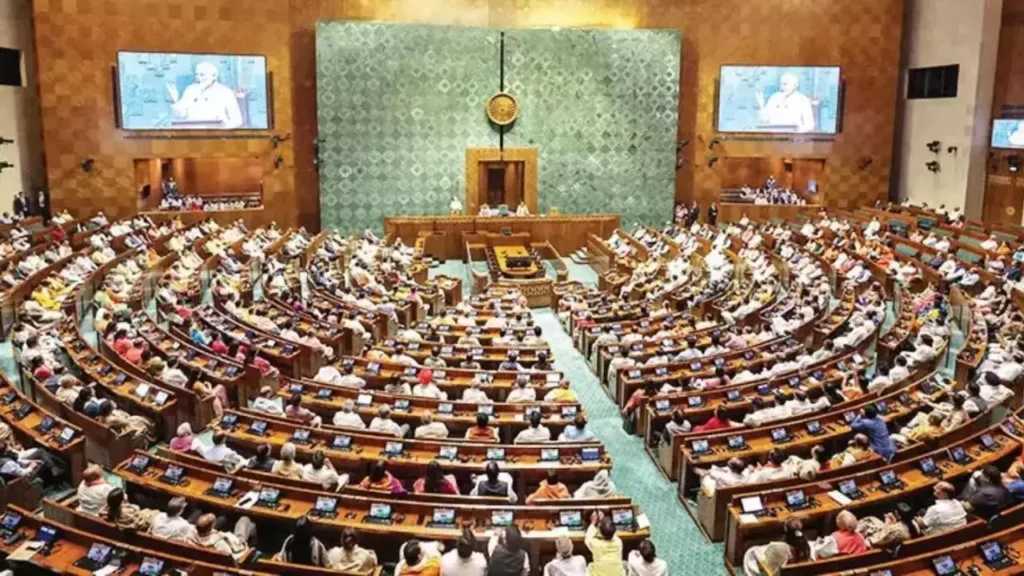
Functioning of Parliament
A larger Lok Sabha may affect individual participation.
The Secretariat often selects Questions and Zero Hour interventions through a ballot system. As membership increases, this system reduces the probability of individual MPs getting selected.
Moreover, Parliament currently sits for fewer than 70 days annually. In comparison, the UK Parliament sits for a significantly longer duration. This difference affects the time available for deliberation.
Concerns Around the Delimitation Process
The process has also generated public debate.
Some observers have raised concerns regarding the possibility of gerrymandering, that is, the strategic redrawing of constituencies. While no official confirmation exists, such perceptions highlight the importance of transparency.
Additionally, questions remain regarding the choice of Census data (2011 instead of 2027), and the timeline of implementation.
Conclusion
The Constitution mandates delimitation. However, its scale and timing make the upcoming process particularly significant.
It will influence representation, institutional balance, and the implementation of women’s reservation. Therefore, policymakers must ensure that the process remains transparent, data-driven, and constitutionally consistent.